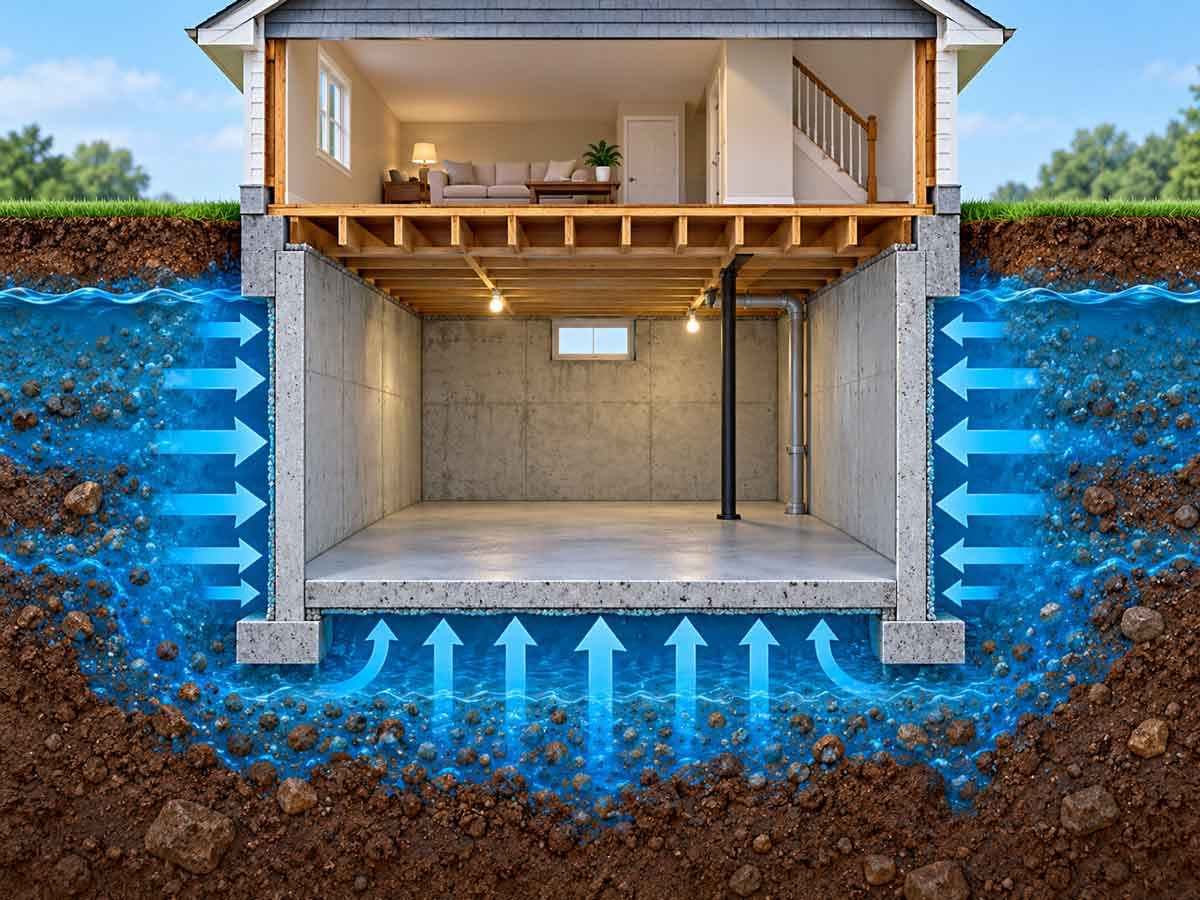
Basement water issues often stem from a common root cause: hydrostatic pressure. Understanding hydrostatic pressure and its potential impact on your basement is critical to staying ahead of basement water problems.
What Is Hydrostatic Pressure?
In basic terms, hydrostatic pressure is the force that water from the soil puts on your basement and foundation from the outside. Breaking down the word hydrostatic, “hydro” means water and “static” means still or non-moving.
The soil’s water content varies with precipitation, drainage, and weather patterns. The more water present in the soil, the greater pressure it puts on the underground level of your home.
When soil absorbs water, it becomes heavier and denser. That dense, wet soil is still limited to the same amount of space, though, so gravity pushes it laterally against your foundation and basement with more force (pressure) as the water content increases.
How Hydrostatic Pressure Impacts Your Home
In essence, hydrostatic pressure is like a big hand squeezing your basement as the soil around your home absorbs water. It squeezes harder when there’s more water, and lighter when there’s less.
While your basement is designed to withstand this outside pressure as much as possible, no architectural design or material selection is perfect. The continual fluctuations of hydrostatic pressure cause stress to your basement and can lead to:
- Cracks and fissures in walls and floors
- Leaning or bowing walls
- Major damage and/or wall collapse
Damage caused by hydrostatic pressure is typically gradual. Over time, however, it can significantly compromise your basement’s structural integrity.
Escalating Damage from Hydrostatic Pressure
When hydrostatic pressure damages a basement, it creates pathways for water to enter. Again, this can be gradual, but even a small amount of water can lead to big problems.
Water naturally follows the path of least resistance. It will seep, drip, or flow into any open space it can. For example, if hydrostatic pressure creates a small crack in your basement wall, water from the outside soil will naturally travel into it.
Even if the crack hasn’t broken all the way through to become a full fissure or break in the wall, water will keep pressing forward because it has to move from the higher-pressure area (the soil outside) to the lower-pressure area (your hollow basement).
Over time, ongoing pressure from the soil and water outside could widen the crack, turn it into a full fissure, and/or create a point of weakness that causes the wall to gradually bow out and become misaligned with the rest of the basement structure.
How Water Gets In
Once water gets a foothold and starts causing damage, the whole process just keeps getting worse if nothing is done. Hydrostatic pressure starts the damage, then water intrudes, and the water plus the continued pressure makes the damage worse and worse.
When water starts to get pushed into your basement, it can show up in a number of ways, including:
- Increasing ambient moisture
- Seeping through small cracks
- Leaking or pooling
- Full water intrusion or flooding
It’s critical to pay attention to even small amounts of excess moisture because it’s a sign damage has started. Typically, it’s much easier to mitigate and fix small basement water issues versus major ones.
Call your local basement waterproofing contractor as soon as you notice anything suspicious. They can help identify the problem and propose solutions to address it and prevent it escalation.
If you suspect you have a basement water problem in Rochester or the area, call BelowDry Basement Waterproofing today. We’re available 24/7 to diagnose, treat, and prevent any wet basement problem you encounter. We’re committed to offering comprehensive solutions, not temporary fixes. You can count on us for exceptional customer service, workmanship, and reliability. We’re fully licensed and insured for your peace of mind, and we’re here to put our 15+ years of experience to work for you, your home, and your family.
BelowDry Basement Waterproofing: Solving Your Wet Basement Problem For Good!