
When your home’s foundation starts sinking, repairing the visible cracks may only address a fraction of the problem. The real trouble could be several feet beneath your basement, where the soil can no longer adequately support the weight of your house.
Fortunately, there’s a foundation repair method designed specifically to address this problem: helical pier installation.
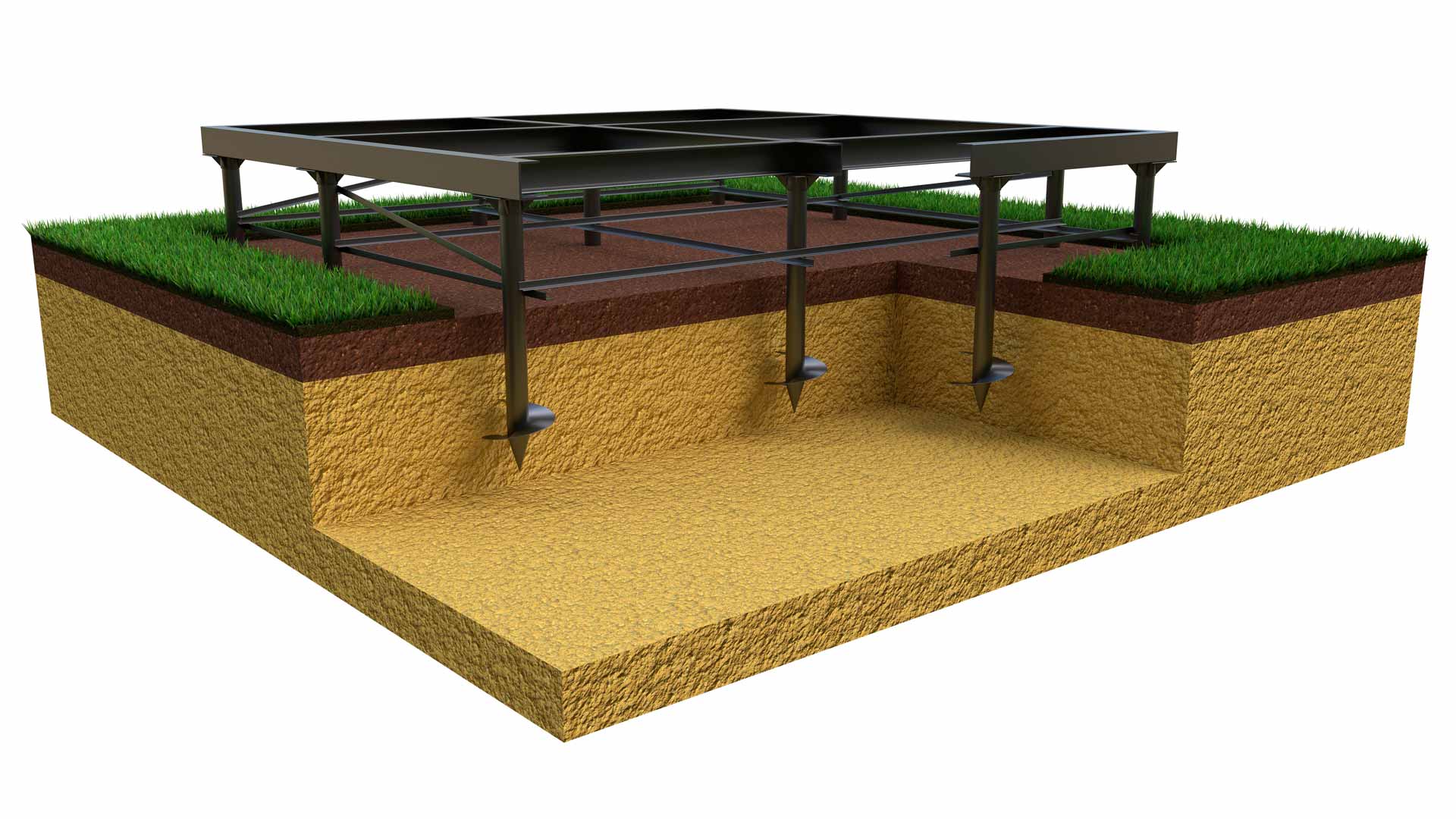
What Are Helical Piers?
Helical piers, sometimes called screw piles, are heavy-duty steel shafts equipped with spiral-shaped metal plates. They resemble oversized screws and operate according to a similar principle.
Using specialized hydraulic equipment, foundation repair contractors rotate these steel supports into the ground until they reach soil capable of supporting the required structural load. The piers are then connected to the home’s existing foundation using heavy-duty brackets.
Essentially, helical piers give your house a new support system without requiring you to replace its entire foundation.
Why Do Foundations Sink in Western New York?
The ground beneath your home isn’t necessarily as stationary as it seems. Throughout Rochester, Buffalo, and the surrounding communities, seasonal weather and soil conditions can contribute to foundation movement.
Several factors can cause foundation settlement, including:
- Improperly compacted soil beneath the home
- Soil erosion caused by poor drainage
- Changes in soil moisture levels
- Compression of weak underlying soil
- Shrinking and swelling of clay-rich soils
When different sections of your foundation settle at different rates, the resulting structural stresses can cause damage throughout your home.
Signs Your Home May Need Helical Piers
Foundation settlement isn’t always immediately obvious. Some of the earliest warning signs may appear upstairs rather than in your basement.
Keep an eye out for:
- Stair-step cracks in brick or concrete block walls
- Doors and windows that have become difficult to operate
- Floors that slope toward one side of the house
- Separation between walls and ceilings
- Cracks that gradually become wider
- Gaps around exterior window and door frames
While these symptoms don’t automatically mean you need helical piers, they warrant a professional foundation inspection.
What Happens During Helical Pier Installation?
The installation process typically begins with excavating small sections around the affected foundation footings. Helical piers are installed at strategically selected locations, with additional shaft sections added as necessary to reach suitable bearing soil.
Throughout installation, contractors monitor the rotational force required to advance each pier. This measurement helps determine its load-bearing capacity.
Once the piers are secured to the foundation, the weight of the affected portion of your home can be transferred to the new supports. In some cases, contractors can also carefully raise settled sections toward their original positions.
Unlike complete foundation replacement, this method generally requires limited excavation, creates less disruption, and can often be completed within a few days.
Are Helical Piers Right for Your Home?
Helical piers are an excellent option for addressing many foundation settlement problems. However, horizontal wall movement, basement leaks, and other foundation issues may require different repair methods.
At BelowDry Basement Waterproofing, our PierTech-certified installers provide professional helical pier installation throughout Western New York. Since 2015, we’ve been helping homeowners protect their properties from foundation damage and basement moisture problems.
If you’re concerned about a sinking or shifting foundation, contact our team today to schedule a free, no-obligation estimate.